Saturday, February 14, 2015

All Hail Sadie Hawkins!

Sadie Hawkins
 First of all – HAPPY VALENTINE’S DAY! I hope you and yours are celebrating in style. I’ll be curled up all day at home with my wife, snug and warm, safe from the arctic winds howling around our house. We will feast on fresh strawberries, cake, and a bottle of Vin Verde, the green wine of Portugal.

Now on to the topic of the day. If you have ever read the comic strip by Al Capp called L’il Abner (1934–1978), you’ll have heard of Sadie Hawkins. Known as the ‘homeliest gal in all them hills’ Sadie’s father, Hekzebiah Hawkins, knew he had to do something to get her hitched, because (gasp) heaven forbid a woman should not be married.  He gathered up all the eligible bachelor’s in the area, gave them a head start and then let loose his daughter. Whichever man she caught would be her husband. There’s no real mention as to why, exactly, the caught bachelor had to marry Sadie, but that’s the way the tradition started. In 1937, according to the cartoonist, the other unmarried women thought this wasn’t such a bad idea, because (gasp) heaven help them if they didn’t catch themselves a husband. Every November, all the eligible young men from Dogpatch and the surrounding hills would be chased by all the unmarried young women. Any gal that could catch her man and drag him across the finish line by sundown was guaranteed to be a bride. Presented in the satirical voice of Al Capp, the unheard of role reversal released some deeply held desire of the repressed women of the time to take charge of their own lives, to make decisions concerning who they would spend time with, and to be unashamedly interested in beginning a relationship with the man of her choosing. Daring thoughts for the time.

Daisy Mae chasing L'il Abner on Sadie Hawkins Day

By 1939, only two years after the ladies of Dogpatch declared their independence (if only for one day a year), the idea had caught fire in the imagination of America’s youth. Al Capp had intended it as a plot device, but the ideas popularity had brought him an abundance of fan letters asking that he make it a yearly event. By the early 1940s the November event in his comic became a phenomenon, eventually taking on a life of its own. Colleges and high schools began holding campus Sadie Hawkins races, which eventually became more sedate dances. At the height of its popularity in the mid 1950’s, Sadie Hawkins Day was celebrated at forty thousand known locations.

After tasting the forbidden fruits of freedom, it’s no wonder the women’s liberation front of the 1960’s and ’70’s centered around women’s demand for self-sovereignty. Women who had grown up with the yearly celebration of bucking convention were eager to take the dating reins in their own hands. Of course, the advent of the birth control pill started an entire sexual revolution, but don’t discount Sadie Hawkins’ contribution.

Comic strips have led the way to social change since the ink first dried. Although L’il Abner’s Sadie Hawkins race was framed in the language of women desperate to marry to avoid a life of spinsterhood and shame, and equally desperate men racing to avoid marriage to a strong minded woman, a fate worse than death, Al Capp accidentally fueled the idea that the sexual repression of women during the ’30’s and 40’s was as unfair as say, a footrace to determine a spouse.

I will confess to inviting a boy to one in the mid 1970’s myself, but I don’t think Sadie Hawkin’s Day dances are held anymore. At least, I never hear of them. Girls and women are free to ask boys and men out on dates these days, or even, as our editor-in-chief Lindsey demonstrated earlier this year, to propose marriage.

We’ve come a long way, baby, and Sadie Hawkins helped lead the charge.

Wednesday, January 14, 2015

5 self-publishing truths few authors talk about

Reblogged from Suffolk Scribblings with thanks to author Dylan Hearn:

One of the hardest thing to watch on social media is an author, usually a debut author, getting excited about their upcoming book launch and knowing they are about to get hit around the head with a hard dose of reality.

They’ve done the right things, built up a twitter or Facebook following, blogged about the book, sent copies out for review, told all their friends about the upcoming launch, pulled together a promo video and graphic, maybe taken out some adverts. The first few days after launch are filled with excited tweets, mentions of early positive reviews and chart rankings. Then, after a few days, maybe a few weeks, the positive tweets stop and an air of desperation sets in as the reality of life as an indie author hits home.

Part of the problem is that the authors most vocal on social media are those that have already seen self-publishing success. They got in early, made names for themselves through talent, hard-work and persistence, and are happy to spread the gospel of the new self-publishing utopia. They are telling the truth, from their perspective, but for the vast majority of authors the picture is very different. This doesn’t mean it’s impossible to find success with your debut novel, just that it’s rare – and with changes in the market, becoming ever more so.

In order to provide some balance, below are 5 truths I, and many other self-published authors, have experienced. This hasn’t put me off from a writing career, and shouldn’t put you off either, but at least you will be going in with your eyes open.


1 You need talent to succeed but it’s no guarantee


The days of being able to publish an average story with an OK cover and finding success are over. There are many, many talented writers out there producing fantastic books who are struggling to find an audience. I know so many brilliant authors struggling to get themselves heard. An excellent story, professionally edited, well presented and with an enticing blurb is the bare minimum entry criteria, and just because you meet it, it doesn’t mean you will be successful.


2 After your initial launch, you book will either take off or bomb – probably the latter


If you have worked very hard and prepped enough people, your book will sell a number of copies on launch. This number will not be as large as you expect as of the people you prepped, some will buy immediately, some when they are ready – no matter how often you’ve explained the importance of a good launch – and some will forget. Repeatedly. If you are lucky – and you have selected your categories wisely – your book will chart making it visible to millions of readers. It’s at this point your book could take off. If so, congratulations, enjoy the ride. More realistically your book will gradually slip down the charts and disappear from view. From then on in, expect sales of only a handful of copies per month, if that.


3 You are unlikely to sell thousands of books in your first year


I’ve yet to find the source of this statistic but it’s said the average ebook sells 100 copies. Not at launch, not in the first year, but over its whole lifetime. Now within that total sample you will get million sellers and zero sellers and your book could be anywhere on this spectrum but the reality is, despite excellent reviews and lots of promotion, your book will probably just tick along at best. Unless you manage to gain a promotion slot on a service like BookBub – especially difficult these days since the big publishing houses have started using their service – or you manage to generate great word of mouth – even more difficult, your sales won’t return to that initial launch peak for a long time, if at all.

Continue reading this excellent article here:  Suffolk Scribblings   I especially enjoyed reading the comments, which became a conversation.

Monday, December 29, 2014

Robin Williams and I

2014 was a year of mourning great talents. 


Lauren Bacall. Pete Seeger. Dr. Maya Angelou. James Garner. Ruby Dee. Philip Seymour Hoffman. Sid Caesar. Shirley Temple. Mike Nichols. Mickey Rooney. Richard Attenborough. Eli Wallach, Tom Magliozzi, Harold Ramis, Ann B. Davis, Menshach Taylor, Elaine Stritch, and more have all died during the last 363 days.

But on August 11, 2014 the world lost Robin Williams, a man who was a legend in his own time, a tormented creative  talent, and a great humanitarian. His death was deeply personal to me. At the time I had no words to express my grief, my memories, my love for this special man.

I, like so many other people in the world, found Robin Williams to be a genius at humor and heartfelt pathos. His movies made me laugh, and cry. The first time I saw him perform, his TV character Mork literally had me falling off the couch in hysterical laughter. In that moment I began a lifetime of looking forward to his next project, whatever it might be.

I remember the first Comic Relief show in 1986, when Robin (by then I loved him so thoroughly I'd promoted our relationship to a first name basis), Billy Crystal, and Whoopie Goldberg hosted 47 comics telling jokes and being funny to raise money for the homeless. I was working then, and donated what I could, that year and for years after. The laughter was good medicine for what ailed me, and touched the heart in a way completely new to charity. Laughter was the great equalizer - no matter how much or how little you have, when a joke is funny you laugh.

I began to notice little things about Robin's behavior when he was being interviewed and supposedly 'off'. I recognized a pattern of behavior that came too close to some of my own, uncomfortably close. A particular interview soon following his father's death still stands out to me. In him I found a mirror of some of my own torments, a kindred spirit, an understanding soul.

I followed his career closely, enjoying as many performances as I could. I loved some more than others. Popeye, first, where I was not surprised one bit at his sense of comedic timing and delivery, and then The World According to Garp, which stunned me with his ability to play a straight role. The Fisher King, Aladdin, What Dreams May Come, Hook, Jumanji, Happy Feet, and The Birdcage, I've watched each of them a dozen times. He made me laugh, he made me cry, he creeped me out (remember One Hour Photo and Insomnia?), and he always made me relate to his character. His career made me happy. I hope it made him happy, too.

When the internet was new and celebrities as inexperienced on it as anyone else, I found a relatively private address for Robin in San Francisco. Thereafter, I sent him a Christmas card every once in a while. I loved picturing him reading my card, so I'd fill it with bits and pieces of things going on in my life, things I couldn't/wouldn't tell other people. Looking at it written down, I can see how that might seem a little odd to people, but it was a dearly held (tenuous though it might be) contact with someone I thought of as a friend.

I didn't hear back from him but that didn't stop me from shooting my arrows into the darkness, hoping they would strike their target and ultimately be read by him. Since none of my cards were ever returned, I was fairly sure they were being delivered somewhere. That was enough to keep me going.

When I'd been writing for a couple of years, I produced my first YA novel, The Boxer Rebellion. A coming-of-age story about bullying gay kids, it is brutally honest which makes it a challenging read. I sent Robin a copy and asked if he thought it was too harsh, too painful for readers to enjoy. For the first time, I got a response, an acknowledgement that I'd been making contact all along, just one direction.

He sent me a photo of himself dressed as Mrs. Doubtfire and signed it:  To Genta, Write On.

Robin Williams told me to keep writing. That private message between us was enough to keep me pushing that book until it finally found a home and began gathering reviews. I imagine him holding my book in his hands while he read. I like to think of him laughing at the funny parts, fuming at the injustice, and ultimately joining The Boxer Rebellion to fight bullying in schools and on the internet. The photo is framed and hangs over my computer to remind me that Robin Williams believed in me enough to encourage me when I was down.

As we start a new year, in his memory I say to you, "Write on, my friend." Please remember that the emotional struggles of the truly talented can often be masked behind achievement and praise, written away as fiction. Be gentle with yourself, today and every day of the rest of your life.

Sunday, December 28, 2014

My Ridiculously Over-Simplified View of American Politics


Politics are pendulums. Everything swings one direction for a while, as it did from the early '60's into the mid '70's with liberalism. Oh, what wonderful years those were. Expansion everywhere with support and inclusivity. Civil rights were understood and fought for with a passing understanding of Constitutional guarantees. Creativity was rewarded and encouraged. Idealists thrived, and even got government subsidies and grants. What a wonderful time that was.

Ever since, there's been a slow and steady resurgence of conservatism. The first I noticed it was when it became important for a significant number of neighbors to be identified with the local churches. That devoted religiosity led directly to inflated patriotism, which in turn led to conservative politics. We're here now, firmly gripped by the grinning jaws of the Tea Party, held hostage by Wall Street, and left out of socially acceptable ways to rise by our own bootstraps, such as college, internships, and sheer hard work. We're busy giving the Koch brothers the biggest {excuse the expression} orgasms of their lives.

America is almost to the tipping point. People, and by that I mean the vast majority of Americans, are feeling economically oppressed. Questions about civil equality are leading to conversations. It's becoming more and more obvious that we are a culture divided deeply into the Haves and the Have-nots. And American Have-nots have a long history of rising up and being heard. Think Selma, Alabama, the vineyards of central California, and Matewan, New Jersey.

Be ready, because the long swing back to liberalism is about to begin, indeed, is already beginning. LGBT folk can marry. Marijuana is being quickly legalized. Black Lives Matter. Soon, those who consider themselves conservative will find themselves questioning their values and choices. Moral weights and measures will change from the rigid, nearly impossible to attain definitions of the 1% for the other 99%, to an expansive understanding of human frailties, realities, and opportunities sooner, rather than later.

So that's my two cents worth of philosophy for today.

Tuesday, September 30, 2014

2015 GCLS Award Nominee

http://www.amazon.com/Riding-Rainbow-Genta-Sebastian-ebook/dp/B00K3HADU2/ref=tmm_kin_title_0?_encoding=UTF8&sr=1-2&qid=1399351700

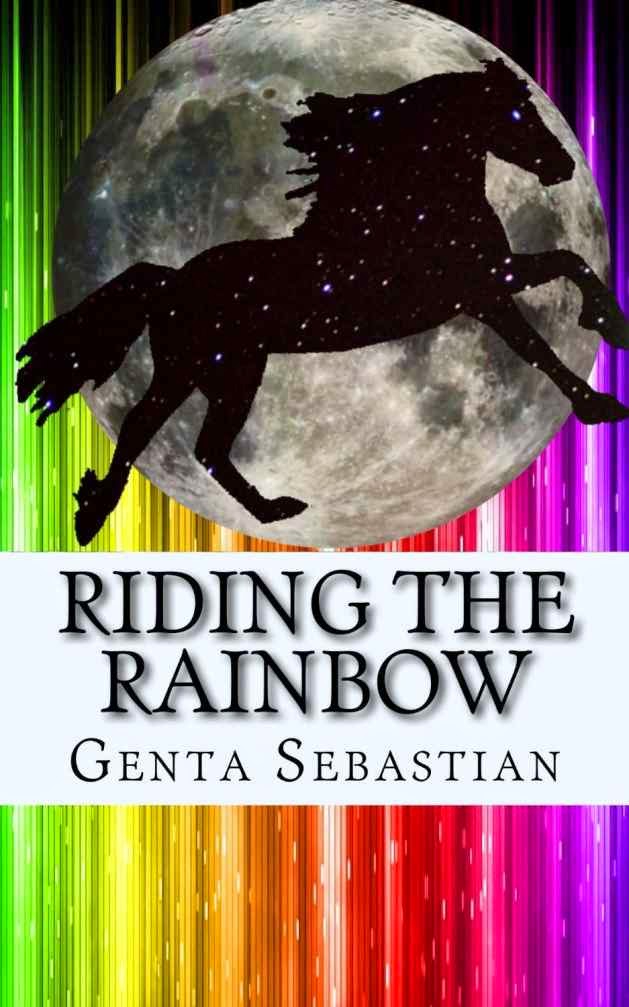
 My novel, Riding the Rainbow, has been nominated for a 2015 GCLS award in the YA category. Yippee!!

In celebration, EVERYONE who responds will receive a free ebook copy of Riding the Rainbow, available for Nooks, Kindles, and in .pdf format.

Make sure to leave a comment below so I know who to contact through private message to find out where to send your FREE copy of Riding the Rainbow!

Saturday, July 26, 2014

How Readers and Writers are Different

 I think writing and reading are two different forms of communication.

When writing, the author gives the reader a single-voiced, one-way experience. As a storyteller, the author provides hours of her/his view of the world and creative inspiration. They do it without ever knowing who their reader will be - a shout into the darkness, a gift to the cosmos, a prayer to be heard.

The reader receives this communication, and then chooses whether to attempt to engage the author in a conversation, or not. It used to be the author's prerogative to refuse to talk to readers, but that time is over. Modern authors that don't engage with their readers risk marginalization, or worse, revengeful reviews.

Personally, I think every author should cherish communications from their readers, and answer their questions in good faith. I also think readers should feel free to respond to the author's body of work, but treat the relationship in the same way a purchaser of a painting would one with the artist. Asking about inspiration, technique, subject matter, any manner of things pertaining to the author's work is fair and encouraged, but it's crossing a line to ask for personal information, or to presume on a friendship that doesn't exist. One might develop over time, but in the beginning the author knows nothing about the reader, while the reader has already gathered an impression of the author from the books they've written.

It's easy for a reader to feel close to an author long before the feeling might be reciprocated. Please, gentle readers, approach authors you wish to befriend with a quiet understanding that they are most likely loners by nature. They have to be or no books would ever get written. And it's their speculative introspection that makes most authors nervous about new relationships.

Sunday, June 15, 2014

Gotta Be Jelly 'Cause Jam Don't Shake Like That


Display of jams in the market behind the
Royal Festival Hall. Creative Commons
license held by Fae
Once in a while one of the writers I work with gives us a prompt that simply demands a stretch of the imagination. When I was given this prompt and only fifteen minutes, I found myself in a sticky situation.

CLEARING THE JELLIES

My aunt Sarah is the best cook in the world. I know this because she tells me every time I’m with her, but I agree with her assessment. Everything I’ve ever eaten by her was beyond delicious, almost to the point of the sublime. So that’s why I entered her in the State Fair jelly making competition.

In retrospect, I believe my decision not to mention it until three days before the entries deadline for the Fair was an error in judgment. It seemed to definitely hit all of her anger buttons, and I ended up high tailing it down the street back to my mother’s house.
 
“Why are you home so early?” asked Mom, looking up from her crocheting.

“Um, Aunt Sarah seems a little upset I’ve entered her red current jelly in the State Fair, so I think I’ll give her a little time to get used to the idea.”

“Martha Jane Johnson, did I just hear you right? You entered my sister in a jelly making contest and didn’t tell her about it until a few days beforehand?” My mom shook with silent laughter. “Oh, you better watch out,” she advised me. “Sarah has always figured out fiendish ways to get back at people who cross her.”

“But, but, but…” I remember spluttering. “I thought she’d take it as a compliment. I mean, I think she’s the best cook in the world,” I suddenly clapped a hand over my mouth, staring at the woman who’s food I’d eaten day in and day out since I was born.

“Don’t worry, I know she’s a better cook than I am,” answered Mom smoothly. “But I crochet better, so we’re even. Why didn’t you enter me in the crocheting competition, huh Martha?”

“Um, I did, Mom.” I ducked as her current project flew toward my head. “Maybe I’ll go visit with Dad for a while,” I said, sidling out of the house and heading for the garage. Over the banging of the screen door I heard my Mom on the phone, saying, “I know! I know! She did it to me too. Now I have to go through all my old projects to decide which one is best to enter. If she’d only told me a few weeks ago I could have planned something truly amazing…”

My dad has years of dealing with my temperamental mother, but even he looked askance. “Didn’t you think they might appreciate enough notice to plan a superior project to enter?” he asked.

Well, the obvious answer to that was, um no, I hadn't thought about that. 

So now I find myself drafted by both women into helping get their projects ready before the entry deadline on Saturday. Mom has me digging through all the old totes in which we’ve stored her blankets, sweaters, scarves, and other decorative crocheting. I dutifully lay them along the back and cushions of the couch for her to examine. After much moaning and groaning she finally decides on a truly amazing baby jacket and matching cap. I suggest she enter the cute bikini she made for my older sister Janet, but it's been worn in the water and is stretched all out of proportion. My mom has me box up the baby stuff to take down to the Home Craft building. On my way I stop at Aunt Sarah’s to pick up her jelly entry.

My aunt is grinning as she hands me two boxes, one light, the other heavy. The small one holds two jars of the very best red current jelly ever made. The large box is taped shut, with a sealed envelope on it for the fair people. I deliver both women’s entries and figure I’ve gotten off easy.

But on judging day, I learn differently. My aunt takes First Place, as I had no doubt she would, and Mom gets an embarrassing Honorable Mention for her baby togs. So I'm happy, thinking the worst has blown over when I'm motioned over by one of the judges.

“And in a special surprise entry,” he intones while looking at me, “our own Martha Jane Johnson has volunteered to display her well known talents in the broad jump by hurtling over a six foot row of jams and jellies, donated for the occasion by her aunt Sarah.” He gestures and a curtain opens showing at least six feet of jars filled with a rainbow assortment of flavors and colors, lying side by side.

I look at my aunt, who points to the starting line. I  glance at my mother for help. She only holds up her Honorable Mention and shakes her head. I'm stuck and I know it, taking my place and considering the obstacles in my way.

Now I’ve taken the state championship for the broad jump two years in a row, so I have at least an even chance. I cleared 7 feet then, but that was after weeks of practice and training. Taking a deep breath, I run ten feet to the masking tape line on the linoleum floor, and jump.

I don't clear all the jellies and land smack in the middle of the grouping, smashing the jars under me to smithereens and showering myself and the first row of watchers with a variety of sweet sticky treats. Unbroken jars skitter along the floor, under chairs, and eventually into the hands of greedy children, some of whom are well over forty. Gales of laughter and shouts of surprise fill my ears. Luckily, I'm the only one who feels the glass.

Lying on my stomach in the ER, under the influence of local anesthetic, I explain to the doctor stitching up my backside, "I could have done it if I'd had a week or two to practice." Looking over at my mother and aunt, both of whom are grinning unrepentantly, I admit, “Okay, okay. I've learned my lesson. You won’t catch me jumping the jelly ever again.”